If you’ve ever wondered what it would be like to walk among Jesus’ inner circle, to wrestle with hopes and doubts about Israel’s long-awaited Messiah, to ultimately be the one responsible for his delivery into the hands of His murderers . . .
If you’ve ever been curious about the cultural setting for Jesus’ ministry, the political climate of his time, the religious nature of his persecution . . .
If you’ve ever struggled with shame and guilt, given up people and places of one life to belong in another, desired to be seen and known and loved . . .
. . . you need to read Iscariot by Tosca Lee.
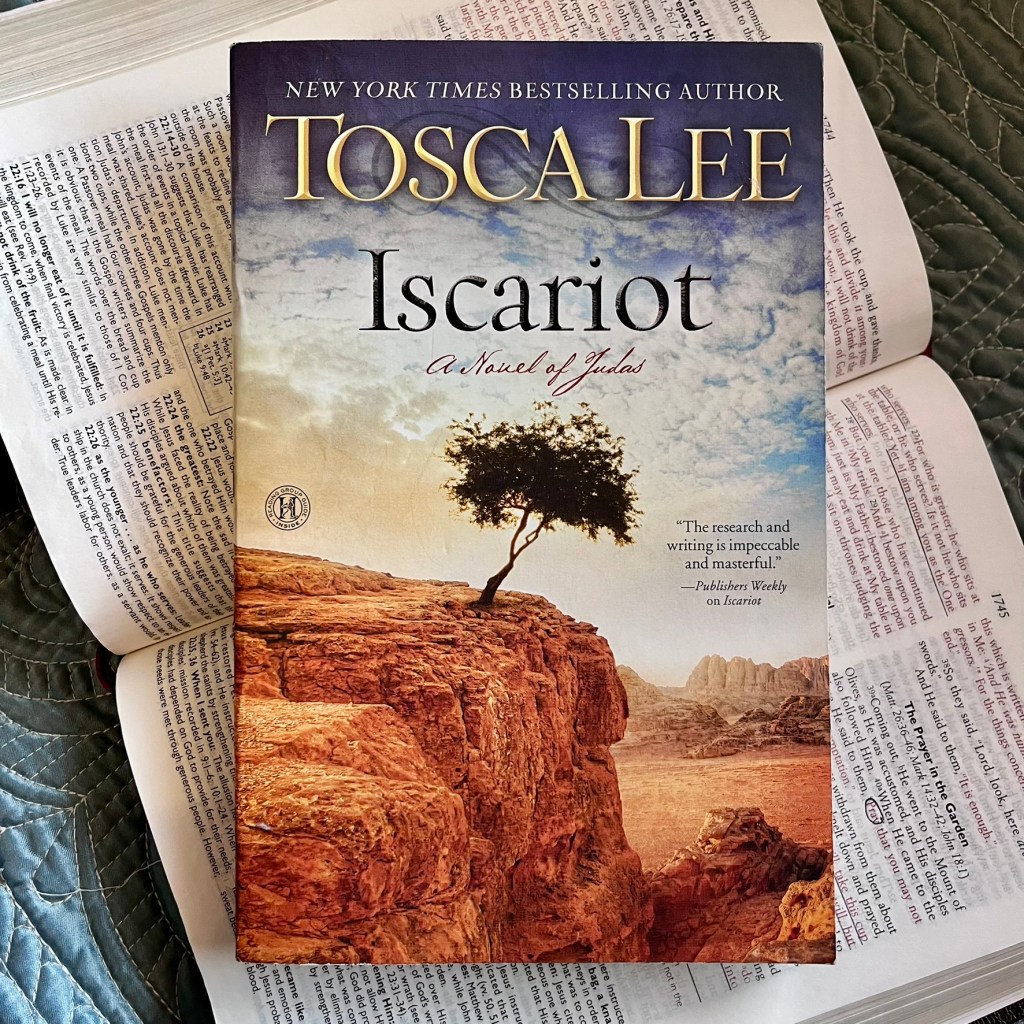
I was a little skeptical when I picked up this novel. After all, we know so little about Judas, and he clearly was the villain to Jesus’ hero because of how Satan himself possessed him and led him to betray his master to his enemies. Right?
Well . . . I won’t see my mind is changed, but after reading Iscariot and the author’s note afterward, I’ve been challenged to consider this disciple-turned-betrayer a little differently.
I was gripped by the fully developed character of Judas Ish Kerioth, from the boy we never meet to the man we see among Jesus’ closest followers. Who was he? How did he grow up? What did he do before meeting Jesus? How did he meet Jesus? What did he think about this man—yet more than a man—who claimed to be the Messiah, the deliverer from God Himself? And how did he end up making the choices that led to Jesus’ death?
We may not know all the answers to these questions, but as she explains in her author’s note, Tosca Lee researched them extensively, pulling from a variety of documents to craft this fictional portrait. And that word is key: fictional. So before you get up in arms, remember that Iscariot is not a true account but an imagined story, crafted with much historical detail, that creatively puts us in the sandals of one of Scripture’s most villainized individuals—and shows us through his eyes Scripture’s most pivotal hero.
I really appreciated this portrayal of Jesus from Judas’ perspective: relatably human and undeniably divine, literally a walking paradox as He travels the dirt roads of Israel, performs miracles, teaches His followers, and confounds the religious leaders. Everywhere He goes, He turns people’s expectations—of the law, of life, of him—on their head.
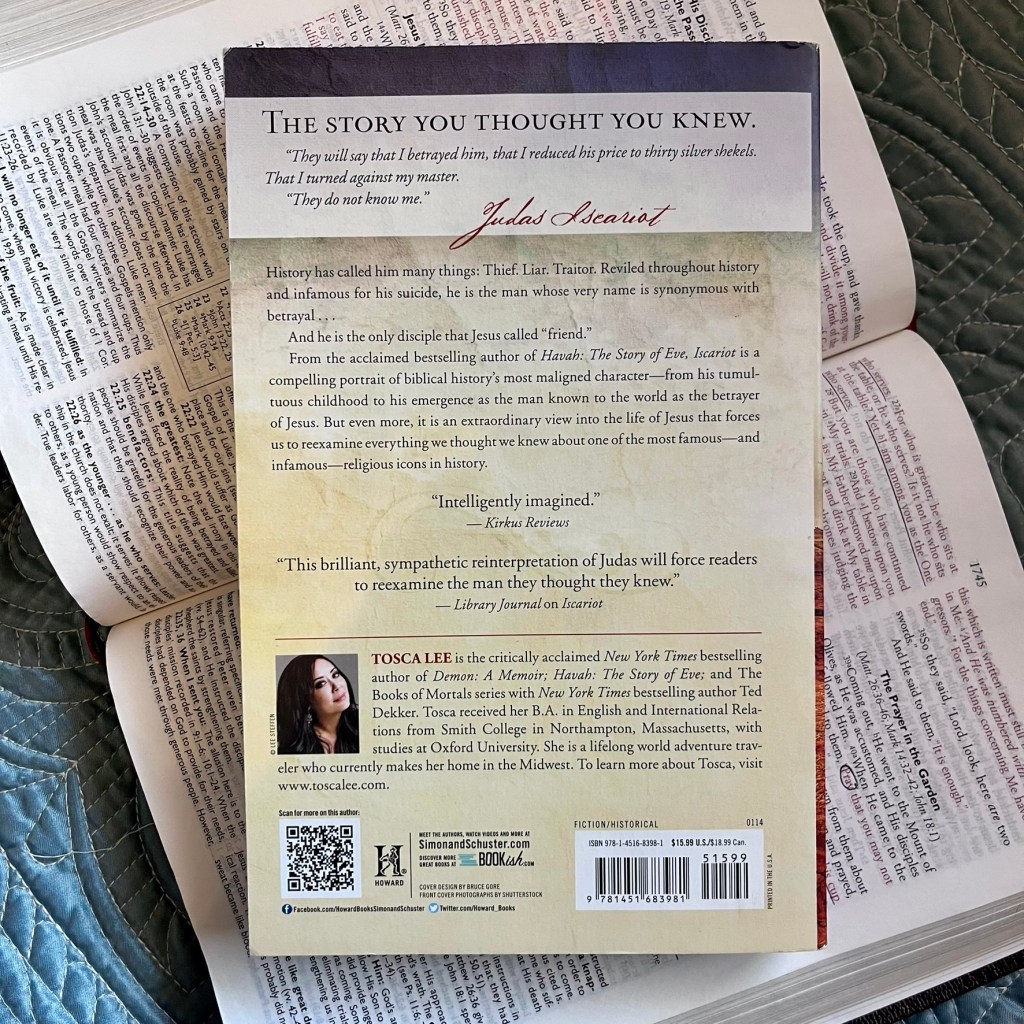
Tosca Lee doesn’t always go into the kind of detail I’m used to from The Chosen and other biblical or historical fiction, and while at first it felt like a cop-out—avoiding or glossing over the person of Jesus and some events of His ministry—the more I read, the more I realized I didn’t need all those details. The most important events to Judas, Jesus, and the story are portrayed sufficiently, and those abbreviated or alluded-to scenes serve to both protect the mystery of Jesus and carry the story that needed to be told.
Yet what details are provided taught me so much about the culture: the Jewish people with their thousands of years of law and tradition, the Roman oppression with its political reach throughout Israel, and the religious culture with its divisions and power grabs and political balances.
Familiar Bible stories took on new depth and meaning when I saw them couched more clearly in the contexts of their time, be it the cultural context of Jesus’ audience, the political context of Rome’s oppression, the geographical context of Israel’s land and neighbors, or the religious context of the Jewish law as interpreted and enforced by the Pharisees, Sadducees, and Essenes. This is one of the beauties of biblical fiction.
Furthermore, this context serves to more brightly highlight the impact Jesus made in his time—and the world. What we see from Iscariot is what The Chosen portrays powerfully as well: a Jesus who rocked the boat—irreversibly, starting ripples that we still feel today. (Can we expect anything less when God Himself steps into humanity?) It was eye-opening to me just how much Jesus upset the Jews’ expectation of the Messiah and how controversial of a figure he became.
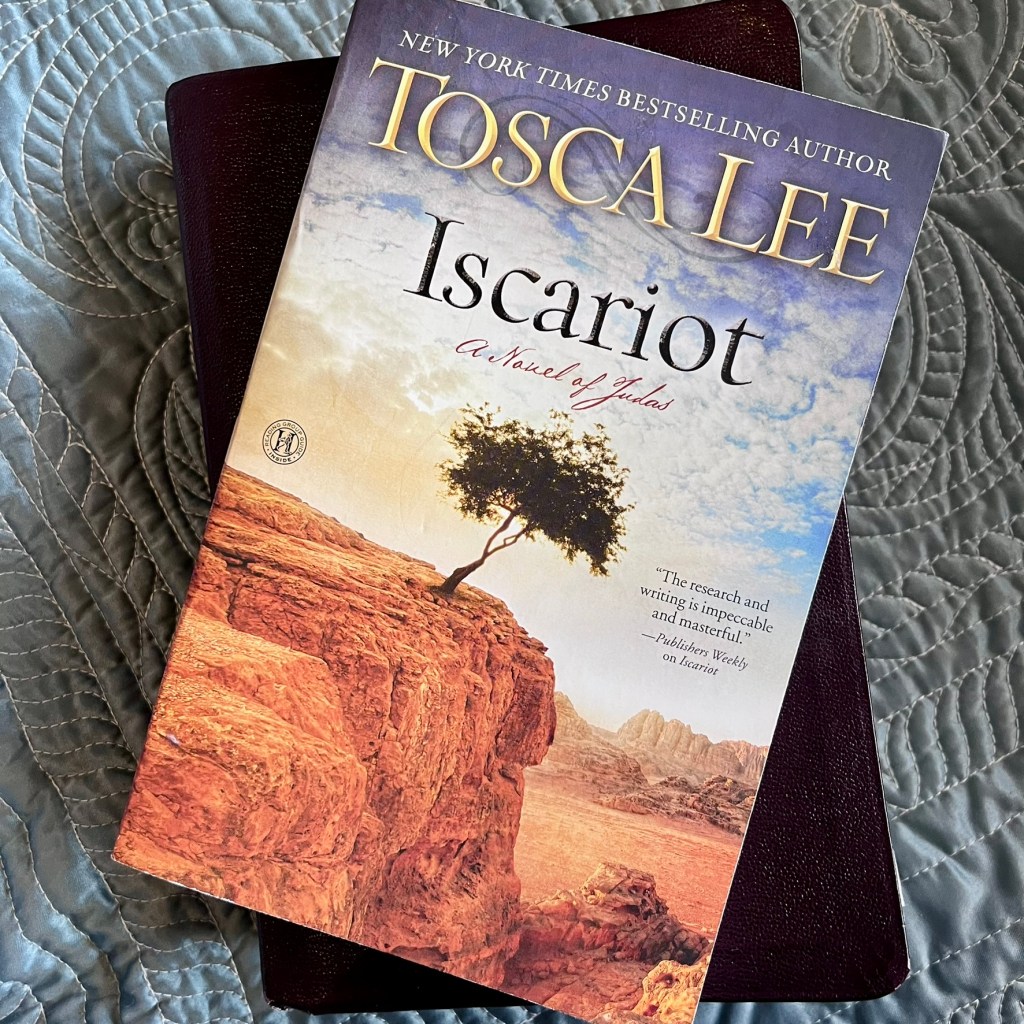
What I didn’t expect from Iscariot was for the character of Judas to be so complex. So human. So relatable in the hurts suffered, dreams dashed, hopes lifted, relationships made and broken. In this way, Judas’ heart is my heart, and your heart, and the heart of any reader. A heart desperate to be seen, known, and loved. A heart that sometimes doesn’t know what to do when it is seen, known, and loved, especially so perfectly as by the heart of God Himself.
What I also didn’t expect was for the motives of Judas to be not hell-bent on evil. We infer from Scripture that he was, or became, an inherently wicked person determined to see Jesus’ downfall; but instead, Tosca Lee’s novel portrays a man who was desperate for good—for himself, for his friend Jesus, and for Israel—and who was played into bringing Jesus to the men who wanted him dead. I haven’t studied enough about Judas from Scripture and other documents to comment on this radical change of perception. I will say, it can make sense considering the events before Jesus’ trial and his remorse and suicide afterward.
Overall, for a novel that honors historical context and detail, tells the story of a richly complex character, and gives valuable insight into the person and role of Jesus, Iscariot by Tosca Lee tops the charts of biblical fiction. It’s the perfect read for fans of The Chosen and anyone wanting to explore biblical history through a creative lens.
Come to imagine the heart of Judas. Stay to envision the heart of Jesus.
 Melissa J. Troutman