Darkness Calls the Tiger by Janyre Tromp exemplifies what Christian fiction should be: a story of Christian characters who aren’t perfect, of darkness juxtaposed with light, of real human tragedy mingled with real divine mercy, of truth-based themes that reach from the pages into the heart of every reader.
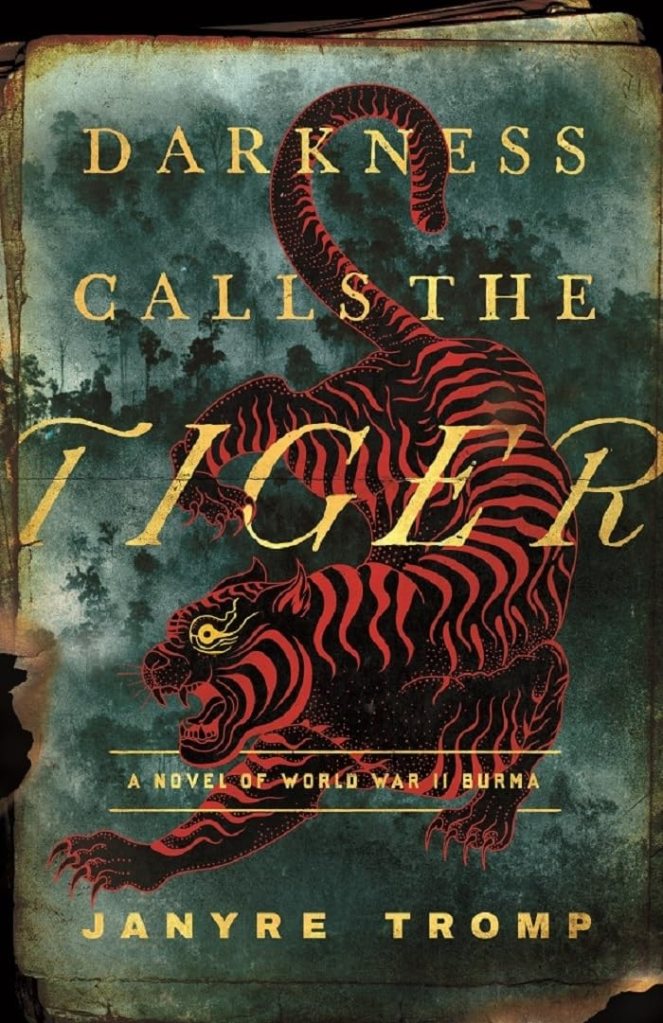
What impressed me about Darkness Calls the Tiger was, first of all, its setting. I love reading World War II historical fiction, though from a repertoire largely based in the European theater of the war. I had no idea the conflict reached the small southeast Asian country of Burma—then a British colony—let alone what it looked like or what the stakes involved. The local, individual struggles of Kailyn, Ryan, and their friends—villager vs. villager, Kailyn vs. Ryan, Kailyn vs. the jungle—gripped me even before the stakes expanded to the larger, international struggle of Allies vs. Japanese Empire, with Kailyn and Ryan at the fulcrum.
As these characters journeyed deeper and deeper into the war, I loved following them through the Burmese jungle, into the Kachin mountains, and past each little village along the way. Tromp includes the perfect amount and type of details, from food to flora, that made me feel like I was really walking the mountain trails with Kailyn, running through a village with Ryan, or sitting in a raised hut with them and their hosts. If you’re looking for WWII fiction with a unique setting, read Darkness Calls the Tiger.
In addition, what impressed me about Tromp’s novel was its writing. I don’t have snippets to share since I listened to the audiobook and couldn’t get my hands on a hard copy (yet), but believe me when I tell you, listening to this story was a treat. (Also, kudos to Leah Horowitz for her stellar narration.) I remember being impressed time and again by Tromp’s descriptions and similes, and especially her verbs that zinged through the prose. If you’re looking for a novel with beautiful writing, read Darkness Calls the Tiger.
What impressed me the most about Darkness Calls the Tiger, however, was its story: the events that catalyzed Kailyn’s journey, the romance—and its obstacles—between her and Ryan, the side characters who came and went and sometimes came again (I’m being vague to avoid spoilers), the travesties and the triumphs of war.
Contrary to the bad rap that Christian fiction has gotten for presenting a “perfect” story, Darkness Calls the Tiger opens its pages to reality: the reality of the missionary who becomes an abusive father, the Christian teacher who doubts God, the woman who suffers physical and sexual abuse, the young child and the old man who are brutally killed, the mother figure and the adopted baby who die without medical care, the grieving friend who turns into a monster. With these characters, with each hardship—and along with each reader—this story asks, Why does God let such awful things happen?
But for Christians, reality doesn’t end in the darkness of human depravity and natural disaster. This story also turns the page to the reality of the enemy soldier who offers to help, the faraway villagers who worship the same God, the prisoner who recognizes his faults, the unexpected gift of food, the miraculous escape, and many other examples—that would really be spoilers so I’ll stop here—all pointing ultimately to the reality of the good, sovereign, powerful, and wise God who yes acts beyond our comprehension but also brings healing, restoration, and freedom beyond our imagination.
Tromp’s novel acknowledges the darkness; that’s why it’s titled as it is. Yet it also acknowledges the light, and the way Tromp brings the two together, with powerful themes of identity, forgiveness, redemption, and love, fulfills what I believe Christian fiction is meant to do. If you’re looking for a historical Christian novel that balances the harrowing reality of darkness with the redeeming reality of light, read Darkness Calls the Tiger.
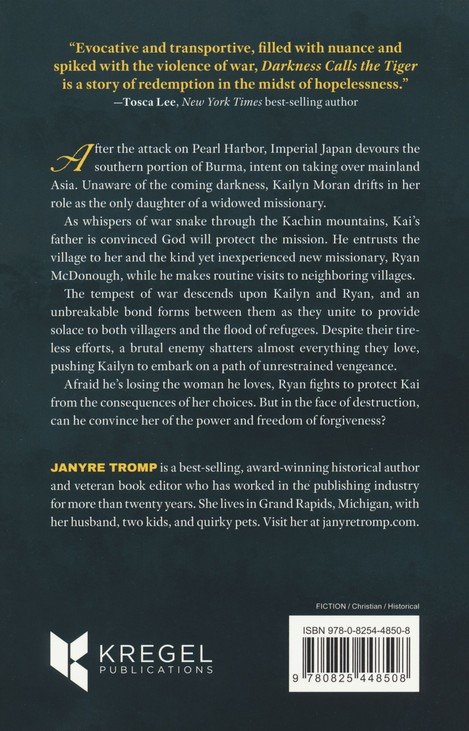
I will say, initially the dual POV threw me a little bit, and I had to adjust to going back and forth between first person (Kailyn) and third person (Ryan). Both POVs were excellently written, however, and I loved following both these characters’ stories. I also found some of the themes a little explicit, whether through character dialogue or internal monologue. But maybe that was just me, and I didn’t feel preached at.
Whatever your druthers—WWII historical fiction, clean romance, complex plots, beautiful writing, deep character journeys, or all of the above—Janyre Tromp’s Darkness Calls the Tiger is worth reading for the way it not only calls readers to face the darkness in ourselves but also offers the hope to overcome it.

